A Parent's Guide to Makharij: Correcting Your Child's Arabic Pronunciation
A simple guide for parents on understanding Makharij (articulation points) and how to gently correct common pronunciation mistakes in their child's Quranic recitation.
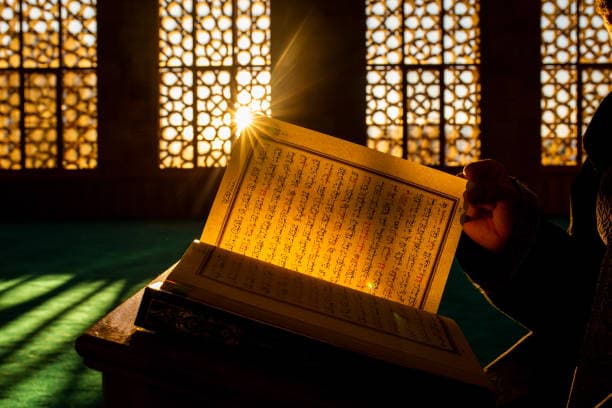
You're listening to your child recite Quran, and you hear it: they say a 'س' (seen) instead of a 'ص' (saad), or a 'ذ' (dhal) instead of a 'ظ' (dha'). You know it's not quite right, but how do you explain the difference?
This is where understanding Makharij al-Huruf (the articulation points of letters) becomes essential. It’s the science of knowing exactly where each sound comes from in the mouth and throat.
But don't worry, you don't need to be a Tajweed scholar to help your child. This guide will give you the simple, practical tools you need.
أهم النقاط
- What is Makharij?: It's the specific place in the mouth, tongue, or throat where an Arabic letter's sound originates.
- Listen First: The first step is to train your own ear to hear the subtle differences between letters.
- Use Mirrors and Feeling: Help your child see and feel where the sound is coming from.
- Focus on One Letter at a Time: Don't overwhelm them. Pick one letter to work on for a week.
- Praise the Effort: Always encourage their attempts. The goal is improvement, not instant perfection.
Why is Makharij Important?
In Arabic, a small change in pronunciation can completely change the meaning of a word. For example:
- قل (Qul - "Say") with a deep 'ق' (Qaaf).
- كل (Kul - "Eat") with a lighter 'ك' (Kaaf).
Correcting Makharij isn't just about sounding "better"; it's about preserving the meaning of the words of Allah. For our children, learning this from a young age builds a strong and accurate foundation that will serve them for a lifetime.
A Simple Approach for Parents
You can't teach what you can't hear. Before correcting your child, spend some time listening to a master reciter like Sheikh Al-Husary. Pay close attention to the "heavy" vs. "light" letters.
- Heavy Letters (Mufakham): These have a full, deep sound. The back of the tongue rises towards the roof of the mouth. Examples: ص (saad), ض (daad), ط (taa), ظ (dhaa), ق (qaaf).
- Light Letters (Muraqqaq): These have a flatter, lighter sound. Example: س (seen), د (daal), ت (taa), ذ (dhal), ك (kaaf).
Practical Techniques to Use with Your Child
1. The Mirror Trick
Sit with your child in front of a mirror. Pronounce a letter like 'ص' (saad) and have them watch your mouth shape. Then, have them try to imitate it while watching themselves. They can often see the difference, even if they can't hear it yet.
2. "Feel the Sound"
- For throat letters like 'ع' (ayn) and 'ح' (haa), have them place their hand on their throat to feel the vibration. Compare it to the feeling of 'أ' (alif) and 'ه' (haa).
- For heavy letters, explain that their mouth should feel "full of air" or like they're making a "big mouth" shape inside.
3. The "One-Letter-a-Week" Challenge
Don't try to fix everything at once. This will only lead to frustration.
- This week, we are the 'Saad' Team!
- For the whole week, playfully focus on the letter 'ص'. Find it in surahs you're reading. Make a "hissing" sound like a snake for 'س' and a "heavy, full" sound for 'ص'. Make it a game.
4. Use Minimal Pairs
Practice words that are identical except for one letter.
- تِين (teen - fig) vs. طِين (teen - mud)
- ذَليل (dhaleel - humble) vs. ظَليل (dhaleel - shady)
- سَيف (saif - sword) vs. صَيف (saif - summer)
Say both words and ask your child, "Which one did I say? The one that means 'fig' or the one that means 'mud'?" This trains their ear in a fun, low-pressure way.
The Most Important Rule: Be Gentle
Your tone of voice matters more than the technical information you provide. Always start with praise.
- Instead of: "That's wrong. It's not 'seen', it's 'saad'."
- Try: "That was a beautiful try! Masha'Allah. Let's make that one letter even more beautiful. Let's try making it a 'heavy' sound, like this..."
هل أنتِ مستعدة للخطوة التالية؟
دورة نهج هي الخطوة الأولى نحو قراءة سليمة ومتقنة، وثقة أكبر في التعامل مع اللغة العربية والقرآن الكريم.
Teaching Makharij is a gradual process. By using these simple, playful techniques and focusing on encouragement, you can help your child build a beautiful and accurate recitation, strengthening their connection to the Quran one letter at a time.